How to Measure ROI in Influencer Marketing: Tools & Strategies That Actually Work. Influencer marketing is no longer about vanity metrics or just brand visibility. Today, brands want one clear answer:
“What is the ROI?”
If you’re investing money, time, and trust into creators, you must know what you’re getting back. Measuring ROI in influencer marketing helps brands understand performance, improve strategy, and scale campaigns confidently.In this guide, you’ll learn how to measure ROI in influencer marketing, the best influencer marketing tools, and proven strategies used by successful brands—without complicated jargon.
What Is ROI in Influencer Marketing?
Understanding Influencer Marketing ROI
ROI (Return on Investment) in influencer marketing measures how much value your campaign generates compared to how much you spend.
In simple terms:
Influencer Marketing ROI = (Value Generated – Campaign Cost) ÷ Campaign Cost
But here’s the truth—value doesn’t always mean sales alone.
What Counts as “Return” in Influencer Marketing?
ROI in influencer marketing can include:
- Sales & revenue
- Leads & inquiries
- Website traffic
- App installs
- Brand awareness
- Engagement & trust
- User-generated content (UGC)
Your ROI depends on your campaign objective, not just numbers.
Why Measuring ROI in Influencer Marketing Is Important
The Real Reason Brands Fail at Influencer Marketing
Most brands don’t fail because influencer marketing doesn’t work.
They fail because they don’t measure it correctly.
Benefits of Measuring Influencer Marketing ROI
- Proves influencer marketing effectiveness
- Helps allocate budget smartly
- Identifies top-performing creators
- Improves future campaign strategy
- Builds confidence with stakeholders
Without ROI tracking, influencer marketing becomes guesswork.
Setting Clear Goals Before Measuring ROI
Why Goals Matter in Influencer Marketing ROI
You can’t measure ROI without knowing what success looks like.
Before running a campaign, ask:
- Is this campaign for awareness?
- Is it for leads?
- Is it for direct sales?
- Is it for content creation?
Each goal requires different metrics.
Influencer Marketing Goals & ROI Metrics
Brand Awareness ROI Metrics
If your goal is visibility:
- Reach
- Impressions
- Follower growth
- Brand mentions
- Share of voice
Engagement ROI Metrics
If your goal is interaction:
- Likes
- Comments
- Shares
- Saves
- Engagement rate
Lead Generation ROI Metrics
If your goal is inquiries:
- Website clicks
- Landing page visits
- Form submissions
- WhatsApp inquiries
- Email signups
Sales ROI Metrics
If your goal is revenue:
- Conversions
- Revenue generated
- Cost per acquisition (CPA)
- Average order value (AOV)
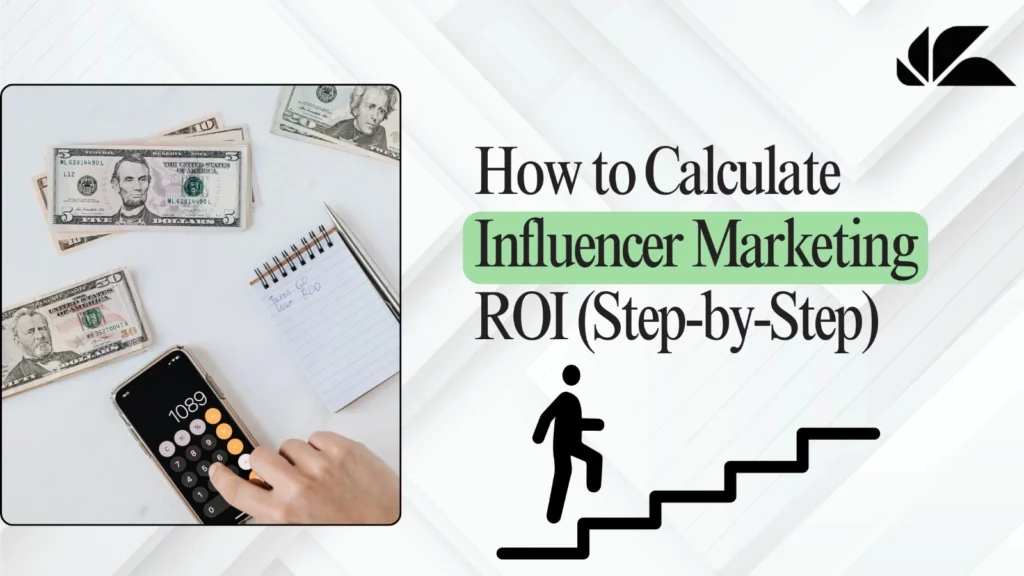
How to Calculate Influencer Marketing ROI (Step-by-Step)
Step 1: Calculate Total Influencer Marketing Cost
Include all costs such as:
- Influencer fees
- Free products
- Agency fees
- Paid ads boosting influencer content
- Content production costs
Total cost = Real investment
Step 2: Measure Total Value Generated
Depending on your goal, calculate:
- Sales revenue
- Lead value
- Traffic value
- Content value
Step 3: Apply the Influencer Marketing ROI Formula
ROI Formula:
ROI (%) = [(Total Value – Total Cost) ÷ Total Cost] × 100
Example of Influencer Marketing ROI Calculation
- Campaign cost: ₹50,000
- Sales generated: ₹1,50,000
ROI = (1,50,000 – 50,000) ÷ 50,000 × 100
ROI = 200%
Tools to Measure ROI in Influencer Marketing
Why You Need Influencer Marketing Tools
Manual tracking is messy and inaccurate.
Using the right influencer marketing tools makes ROI tracking simple and reliable.
Best Tools to Measure Influencer Marketing ROI
Google Analytics (Free & Powerful)
Best for: Website traffic & conversions
Track:
- Influencer referral traffic
- Conversions from influencer links
- Time spent on site
- Bounce rate
Tip: Use UTM links for every influencer.
UTM Links for Influencer Tracking
UTM links help identify:
- Which influencer drove traffic
- Which post performed best
- Which platform converts more
Example:
utm_source=instagram
utm_medium=influencer
utm_campaign=summer_sale
Influencer Marketing Platforms
Popular Influencer Marketing Tools
- Upfluence
- Aspire
- CreatorIQ
- HypeAuditor
- Modash
These tools help with:
- Influencer discovery
- Campaign tracking
- Engagement analytics
- ROI reporting
Social Media Analytics Tools
Tools like:
- Instagram Insights
- YouTube Studio
- TikTok Analytics
- Meta Business Suite
Track:
- Reach
- Engagement
- Saves
- Profile visits
Affiliate Tracking Tos
If sales matter, affiliate tracking is gold.
Use:
- Unique discount codes
- Referral links
- Affiliate dashboards
This allows direct ROI measurement per influencer.
Measuring ROI for Different Influencer Marketing Campaigns
ROI for Nano & Micro Influencers
Nano and micro influencers often give:
- Higher engagement
- Better trust
- Lower cost
- Stronger ROI
- Engagement rate
- Leads generated
- Cost per lead
ROI for Macro & Celebrity Influencers
Celebrity influencers focus more on:
- Brand awareness
- Mass reach
- Brand credibility
Measure ROI through:
- Reach
- Brand search increases
- Follower growth
- Media value
Earned Media Value (EMV) in Influencer Marketing
What Is Earned Media Value?
EMV estimates how much influencer exposure would cost if paid via ads.
EMV includes:
- Likes
- Comments
- Shares
- Views
Though not perfect, EMV helps compare campaigns.
Attribution Models in Influencer Marketing ROI
Why Attribution Matters
Customers don’t always buy immediately after seeing an influencer’s post.
Attribution helps understand:
- Influencer’s role in the buyer journey
Common Attribution Models
- First-click attribution
- Last-click attribution
- Multi-touch attribution
Use multi-touch when possible for better ROI clarity.
Tracking Influencer Marketing ROI for E-Commerce
Best Practices for E-Commerce Brands
- Use influencer-specific discount codes
- Track checkout conversions
- Monitor repeat purchases
- Measure customer lifetime value (CLV)
Tracking Influencer Marketing ROI for Service Businesses
ROI Tracking for Leads & Inquiries
Service brands should track:
- WhatsApp clicks
- Call button taps
- Contact form submissions
- Consultation bookings
Assign an average lead value to calculate ROI.
Common Mistakes in Measuring Influencer Marketing ROI
Mistake 1: Focusing Only on Likes
Likes don’t pay bills.
Focus on business impact, not vanity metrics.
Mistake 2: Not Setting KPIs Before Campaign
Always define:
- KPIs
- Benchmarks
- Expected outcomes
Mistake 3: Ignoring Long-Term Value
Influencer marketing builds:
- Trust
- Brand recall
- Community
Some ROI shows over time—not instantly.
Strategies to Improve Influencer Marketing ROI
Choose the Right Influencers
ROI improves when influencers:
- Match your brand values
- Speak to your target audience
- Create authentic content
Focus on Content, Not Just Reach
High-quality content:
- Performs better
- Can be reused as ads
- Builds long-term value
Repurpose Influencer Content
Use influencer content for:
- Paid ads
- Website testimonials
- Social proof
- Landing pages
This multiplies ROI without extra cost.
Combine Influencer Marketing with Paid Ads
Boost high-performing influencer posts to:
- Increase conversions
- Lower ad fatigue
- Improve ROAS
Reporting Influencer Marketing ROI to Stakeholders
What to Include in Influencer ROI Reports
- Campaign objective
- Influencer list
- Cost breakdown
- Performance metrics
- ROI calculation
- Key insights
Keep it simple and visual.
The Future of Influencer Marketing ROI
What’s Changing?
- Performance-based influencer deals
- Pay-per-lead models
- UGC-first influencer strategies
- AI-driven influencer analytics
Brands are shifting from fame to performance.
Final Thoughts: Measuring ROI in Influencer Marketing Made Simple
Influencer marketing works—but only when measured correctly.
When you:
- Set clear goals
- Track the right metrics
- Use the right tools
- Focus on value, not vanity
You turn influencer marketing into a predictable growth channel, not a gamble.
Measure smarter. Optimize continuously. Scale confidently.
You Can Check Out Our Interesting Blog: Why Influencer Marketing Fails for Many Brands (And How to Fix It)