For more than 20 years, Google has been our go-to place for answers.
Need a recipe? Google it.
Need homework help? Google it.
Need business ideas? Google it.
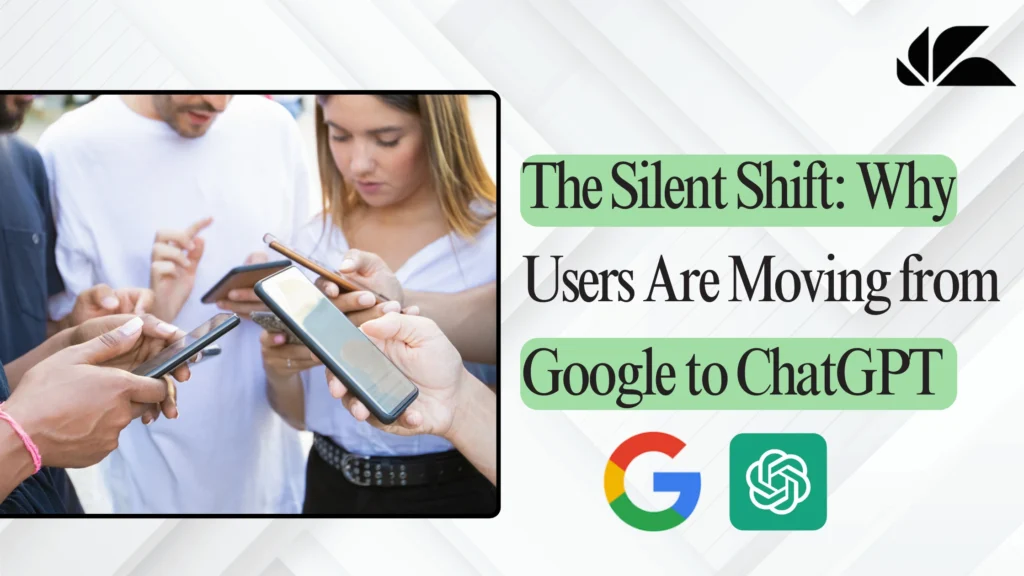
But something is quietly changing.
More and more people are now opening ChatGPT instead of Google for their daily tasks. This change is not loud. There are no big announcements. But the shift is happening — slowly, silently, and steadily.
So the big question is: Why are users moving from Google search to ChatGPT conversations?
Let’s understand what’s really going on.
From Searching to Asking: A Big Change in Behaviour
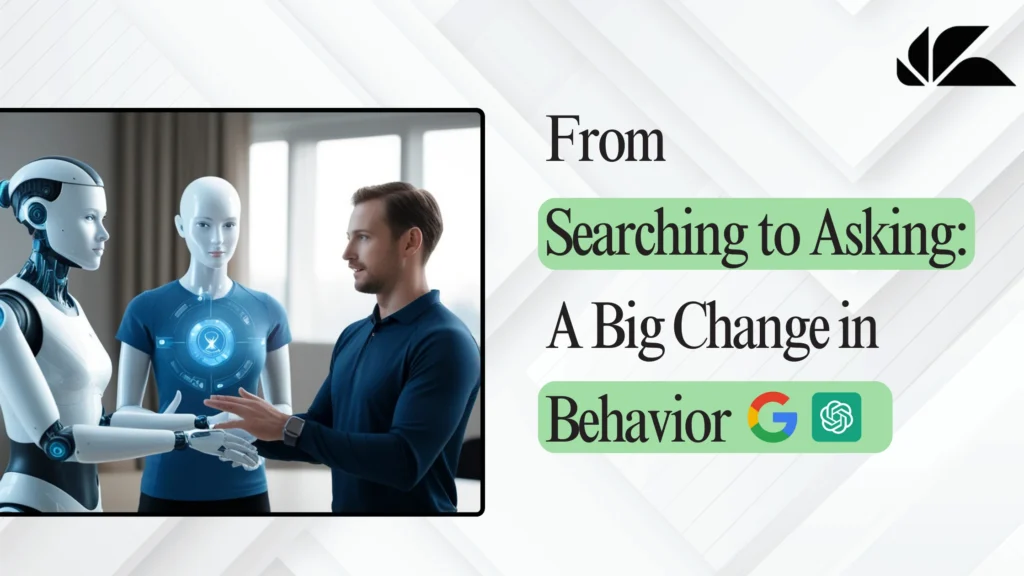
Google works like a search engine.
You type keywords.
It shows you links.
You open different websites to find your answer.
ChatGPT works differently.
You don’t “search.”
You ask.
Instead of typing:
“best marketing ideas for small business”
You can ask:
“Give me 10 marketing ideas for a small clothing shop with a low budget.”
And you get a direct, structured answer.
This feels more like talking to a smart assistant than searching through pages. That difference — searching vs. asking — is one of the biggest reasons people are shifting.
People Want Answers, Not Links
Google gives you options.
ChatGPT gives you answers.
When you search on Google, you often:
- Click multiple links
- Read long articles
- Scroll through ads
- Try to find the exact information you need
This takes time.
ChatGPT, on the other hand, gives:
- Clear explanations
- Step-by-step guidance
- Short summaries
- Direct solutions
For many daily tasks, people don’t want to read 10 websites.
They just want someone to explain things simply.
That’s where ChatGPT wins.
ChatGPT Feels Like a Personal Assistant
Google is a tool.
ChatGPT feels like help.
You can say:
- “Explain this in simple words”
- “Make it shorter”
- “Give examples”
- “Rewrite this message politely”
You can even ask follow-up questions.
Google doesn’t remember your previous question in the same way.
ChatGPT continues the conversation.
This back-and-forth style makes people feel supported, not just informed.
Daily Tasks Are Becoming Easier with AI
Many people now use ChatGPT for everyday work, like:
- Writing emails
- Creating captions
- Planning trips
- Solving math problems
- Understanding difficult topics
- Preparing interview answers
- Brainstorming business ideas
- Learning new skills
Earlier, they had to:
Search → Read → Think → Write
Now they:
Ask → Get → Edit → Use
It saves time and mental effort.
That convenience is a major reason behind the shift.
Less Distraction, More Focus
Google search results today are filled with:
- Ads
- Sponsored posts
- SEO-heavy articles
- Popups
- Long introductions
Sometimes it’s hard to find the real answer.
ChatGPT gives a clean response without ads or pop-ups.
Just information in a simple format.
For users who want fast and focused help, this feels much better.
Better for Learning in Simple Language
Students and learners are also shifting.
Why?
ChatGPT can explain things in different ways.
You can say:
- “Explain like I am 10 years old.”
- “Explain with a real-life example.”
- “Make it very simple.”
Google cannot adjust explanations based on your level.
It only shows what websites have already written.
ChatGPT adapts to you.
That makes learning less stressful and more personal.
ChatGPT Helps with Creation, Not Just Information
Google is great for finding information.
But ChatGPT helps you create.
For example:
Instead of searching:
“How to write a leave application”
You can say:
“Write a leave application for 2 days because I have a fever.”
And it writes one for you.
People now use ChatGPT to:
- Write messages
- Draft posts
- Create scripts
- Generate ideas
- Plan content
This shift from finding information to creating output is very powerful.
Conversational Experience Feels More Human
Let’s be honest — typing on ChatGPT feels like chatting.
You can say:
“Not like that, make it more friendly.”
“Shorter, please.”
“Add emojis.”
“Make it professional.”
This feels interactive and human.
Google does not “talk back” or adjust based on your feedback.
That conversational experience makes users more comfortable and engaged.
People Are Tired of Information Overload
On Google, you often get too much information.
Different websites say different things.
Some are outdated.
Some are too technical.
Some just want clicks.
Users now prefer:
Clear
Short
Straight-to-the-point
ChatGPT reduces information overload by summarising and simplifying.
Faster Brainstorming and Idea Generation
Earlier, if someone needed ideas, they searched blogs and articles.
Now they ask ChatGPT:
- “Give me Instagram reel ideas for a gym”
- “Business ideas under low investment”
- “YouTube video topics for beginners”
Within seconds, they get a list.
This makes ChatGPT a powerful brainstorming partner, not just a search tool.
Workplaces Are Also Adopting AI Tools
The shift is not only personal — it’s professional too.
Employees use ChatGPT for:
- Drafting reports
- Writing emails
- Summarizing meetings
- Creating presentations
- Generating content
Earlier, they searched Google and manually created everything.
Now AI speeds up their workflow.
When daily work changes, habits change too.
Mobile Generation Prefers Conversation Over Search
Younger users, especially Gen Z, are used to:
- Voice notes
- Chat apps
- Instant replies
Typing keywords into a search engine feels old-fashioned to them.
Asking a question in natural language feels easier and more modern.
That’s why many younger users are more comfortable with AI tools than traditional search.
But Google Is Not Disappearing
This is important.
Google is still very powerful.
People still use Google for:
- News updates
- Shopping
- Local searches
- Maps and directions
- Research from multiple sources
ChatGPT is not fully replacing Google.
Instead, it is replacing some types of searches, especially:
- How-to questions
- Explanations
- Writing help
- Idea generation
It’s not a replacement — it’s a shift in how we get help.
The Shift Is About Experience, Not Just Technology
The real reason behind this change is not just AI.
It’s about user experience.
People want:
- Faster answers
- Simple language
- Less effort
- More personalization
ChatGPT delivers that in a smooth way.
The silent shift is happening because the experience feels better, not because people suddenly stopped trusting Google.
What This Means for the Future of Search
Search is becoming conversational.
Instead of typing broken keywords like:
“best phone under 20000, camera, good battery”
People now ask:
“Suggest the best phone under 20,000 with a good camera and battery life.”
Search behaviour is becoming more human.
In the future, search engines and AI tools may combine.
But one thing is clear: People want guidance, not just results.
What Businesses and Creators Should Understand
This shift changes digital marketing, too.
Earlier, businesses focused only on:
Ranking on Google search.
Now they must also think about:
- How AI tools present information
- How to create helpful, clear content
- How to answer real user questions
Because users are not just searching — they are asking.
Brands that provide direct value and clarity will grow.
The Silent Shift Is Just Beginning
We are still in the early stage.
Not everyone uses ChatGPT daily yet.
But the number is growing fast.
Just like smartphones slowly replaced basic phones, AI assistants are slowly becoming part of daily life.
The change is quiet — but powerful.
Final Thoughts: From Search Engine to Thinking Partner
Google helped us find information.
ChatGPT helps us understand, create, and decide.
That is the big difference.
The silent shift from Google to ChatGPT is not about replacing one tool with another.
It’s about moving from:
Searching → to Conversing
Scrolling → to Understanding
Finding links → to Getting help
And as long as people want faster, simpler, and more human-like assistance, this shift will continue.
You Can Check Out Our Interesting Blog: Is the Social Media Manager Job Dying?